WE NOW HAVE A NEW WEBSITE:
Please visit www.freeeducationcampaign.org to find out our latest news, events and campaigns
Tuesday, January 18, 2011
Thursday, January 13, 2011
March on Parliament – Protest to save EMA, 19th January

On Wednesday 19th January, MPs will debate and vote on the abolition of EMA.
WEDNESDAY 19th JANUARY
Demonstrate
We must protest in our thousands against the government’s plans to abolish EMA – vital support for young people and often the difference between gaining a college education and not.
Assemble 4pm at PICCADILLY CIRCUS to March on Parliament from 5pm
Supported by the London Student Assembly, National Campaign Against Fees and Cuts, Education Activist Network and Free Education Campaign
Please spread the word by inviting everyone to the facebook event here.
Lobby
The NUS have called a lobby of MPs – to put pressure on MPs ahead of the vote.
You need to arrange a meeting with your MP before you travel to London. Once you have arranged a meeting fill this form (http://www.surveymonkey.com/s/emalobby) to let NUS know which MPs are being lobbied.
Visit the NUS website for more info.
TUESDAY 18th JANUARY
Day of action sponsored by NUS
The NUS is encouraging students to organize local activists such as lunchtime / after college protests, handing in petitions to constituency office – on 18th January – the day before the vote.
Check with your Students’ Union for further details.
Tuesday, January 11, 2011
Aaron Porter is no longer fit to lead the student movement

Mary Robertson, supporter of the Free Education Campaign, writes in today’s Guardian on the need for an NUS leader who will fight for us, not one who admits defeat before the battle over tuition fees has started.
The gap between the official and the unofficial student movements is growing. Last month, tens of thousands of students gathered on Parliament Square in an attempt to prevent parliament passing legislation that would allow tuition fees to increase – the latest in a series of demonstrations, occupations and other actions over the preceding month. As students attempted to defend their education system, around the corner, tucked out of sight on the Victoria Embankment, 200 people were mourning its death at a glow-stick vigil organised by the National Union of Students (NUS).
The contrast between these two events – both in terms of size of attendance and in tone – provided a stark illustration of why the NUS president, Aaron Porter, is no longer fit to lead the student movement. He demonstrated this yet again at this week's NUS National Executive Council (NEC) meeting by voting against supporting two further student actions in January.
Parliament may have passed the tuition fees bill on 9 December, but students involved in mobilisations at the end of last year have made clear that they are not giving up. The phrase "this is just the beginning" has become our mantra. It is evidence of our resolve that we have called two major actions for January: a "Save EMA" day of action on 26 January and a "Defend Education" demonstration in London on 29 January. The latter is intended as a complement to a youth rally for jobs taking place in Manchester on the same day. It has the backing of the UCU, Unite, GMB, NUS Black Students Campaign, the Coalition of Resistance, the National Campaign Against Fees and Cuts, the Education Activist Network and the Free Education Campaign. Yet in a clear sign of how out of step the NUS leadership is with its members and the rest of the union movement, Porter and the majority of the NUS NEC voted against backing either.
At a time when union leaders such as Len McCluskey are praising students and calling on the labour movement to follow in their footsteps, the NUS president is refusing to back further actions to defend education.
It is also a sign – and not the first one – that Porter seems to be giving up the fight. Over Christmas, he wrote an open letter to Simon Hughes MP, the government's newly appointed advocate for access to education. In it Porter says: "We are finding it hard to get the government to explain how it will ensure that £9k rather than £6k fees will be the 'exception'". There you have it: Porter's response to the threat to higher education is to politely request an explanation of how tuition fees will only be doubled rather than tripled in most cases.

The NEC vote was just the latest in a series of betrayals. The NUS repeatedly failed to back, let alone call, days of action in the weeks leading up to the vote. Porter only belatedly pledged support for occupations and then failed to deliver on his promise to provide them with legal support. In the days after the last demo, he refused to make a statement condemning police violence, despite more than 43 students being injured.
Students need a fighting union. The fact that 52,000 people from right across the country attended on 10 November demonstrates the ability the NUS has to mobilise when it puts its infrastructure behind it. We move into the new year with the firm belief that we can defeat the government's plans. But to do so we need an NUS leadership that will fight with us and for us, not one that will resign itself to defeat before the battle has barely commenced.
Two universities – Birkbeck and the School of Oriental and African Studies – have already passed motions of no confidence in Aaron Porter. Twenty five will be enough to trigger a national conference and a campaign for this to happen is already gathering momentum.
It is not too late for Aaron Porter to change his mind. Actions planned for 26 and 29 January are crucial next steps in our fight against the government's cuts. The NUS needs to demonstrate its willingness to lead the fight by backing both events. Otherwise, it's time for Aaron Porter to go.
Monday, January 10, 2011
NUS sinks to a new low – Aaron Porter it is time to go

Today the NUS refused to support a day of action and a London demonstration against the scrapping of EMA, higher fees and cuts that has wide student and trade union backing – including from UCU, Unite the Union, GMB, National Campaign Against Fees and Cuts, Education Activist Network, London Student Assembly and the Free Education Campaign.
The Save EMA: National Student Strike Day of Action taking place on the 26 January and the National demo – No fees, No Cuts! Defend Education and the Public Sector taking place on the 29 January are both key opportunities for students and the wider public to mobilise in our thousands in opposition to the Tories’ assault on students and the welfare state.
However, the NUS President Aaron Porter led a majority of the NUS NEC to vote against supporting these actions.
Sean Rillo Raczka – leading progressive NUS NEC member – tweeted the results of the vote (see @seanrr1982):
“NUS NEC votes against supporting London Demo on the 29th Jan. 13 for supporting and 22 against”
“NUS NEC votes against supporting London EMA Day of Action on 26th January. For supporting 26th 6, against 27”
Following Aaron Porter’s latest betrayal of students, Sean tweeted:
“Sickened by out of touch NUS NEC. Told Aaron Porter to resign, he opposes students. My amendment pro a militant NUS is being discussed now.”
That we need an NUS leadership willing to lead the fight against Tory cuts could not be clearer.
It is no wonder that the ‘It is time to go Aaron Porter - we need a fighting NUS’ campaign is gathering momentum.
With or without the support of NUS the fight back against the Tories must continue.
Please get involved in promoting the next day of action and two demonstrations:
Wednesday 26th January, 12noon – 6pm
SAVE EMA: National Student Strike Day of Action – London event is from your school or college to Trafalgar Square to various after actions. Facebook event for further details.
Saturday 29th January - Demonstrate in London and Manchester
London National demo – No Fees, No Cuts! Defend Education & the Public Sector! 12pm-3pm, central London
Manchester TUC rally for young people – a future that work, 1pm-3pm, Platt Fields Park, Manchester
Thursday, January 6, 2011
The last occupation standing – Kent occupiers lead the way

Yesterday student occupiers at Kent University ended their sit in after a month of occupation, marking the end of this round of national, mass direct action on campuses across Britain.
On leaving the occupation, student Ben Stevenson said “it’s not over, it’s simply the end of the beginning and we will continue pursuing our campaign.” We could not agree more!
Congratulations to all involved in the Kent Occupation – you are an absolute inspiration.
Check out the BBC coverage of how the occupation ended yesterday here.
Below we share a video from before the Christmas holidays of the occupiers pledging to stick it out over the festive break – a goal they impressively achieved, despite the university making life as difficult as possible by cutting off the heating and preventing people from entering and leaving the building.
Wednesday, January 5, 2011
Students must not meekly accept defeat on fees - a response to Aaron Porter’s letter to Simon Hughes
By Fiona Edwards (Birkbeck Occupier) and Mary Roberston (SOAS Occupier)
Today NUS President Aaron Porter wrote an open letter to Simon Hughes MP who has recently been appointed to the role of ‘Advocate for Access to Education’ in the Tory-led government.

With higher fees of 9k fast on the way you would think that the ‘leader’ of the student movement would be writing to Hughes to remind him of the overwhelming opposition amongst students and the wider public to this disastrous, immoral and counter-productive policy.
You would think that the NUS President would have taken this opportunity to politely remind Mr Hughes that the scale of student anger over the decision to treble fees is not going to fade away. Indeed, you would think Porter would have expressed a little pride in the fantastically inspiring student uprising – on a scale unrivalled in decades.
You might even expect Aaron to point out that students are going to continue to fight against all higher fees tooth and nail and oppose every single cut to our education and public services.
Instead, we have an NUS President that meekly accepts defeat. On the question of fees he recommends that Simon Hughes ensures “fees over £6,000 really are only charged in exceptional circumstances.”

We should be demanding that fees of £6,000 are charged under NO circumstances whatsoever! And why on earth does the NUS President imply that £6000 annual tuition fees are acceptable?
These words are not the words of a fighting NUS. These are the words of an NUS leadership that is incapable of putting up a fight to defend the next generation.
It is alarming that the author of this letter is the leader of an organisation which represents 7 million students. This cannot continue.
A new NUS leadership is required now more than ever. Aaron Porter, you know where the door is – it is time for you to go.
For further details see the facebook page: ‘It is time to Aaron Porter – we need a fighting NUS’
Today NUS President Aaron Porter wrote an open letter to Simon Hughes MP who has recently been appointed to the role of ‘Advocate for Access to Education’ in the Tory-led government.

With higher fees of 9k fast on the way you would think that the ‘leader’ of the student movement would be writing to Hughes to remind him of the overwhelming opposition amongst students and the wider public to this disastrous, immoral and counter-productive policy.
You would think that the NUS President would have taken this opportunity to politely remind Mr Hughes that the scale of student anger over the decision to treble fees is not going to fade away. Indeed, you would think Porter would have expressed a little pride in the fantastically inspiring student uprising – on a scale unrivalled in decades.
You might even expect Aaron to point out that students are going to continue to fight against all higher fees tooth and nail and oppose every single cut to our education and public services.
Instead, we have an NUS President that meekly accepts defeat. On the question of fees he recommends that Simon Hughes ensures “fees over £6,000 really are only charged in exceptional circumstances.”

We should be demanding that fees of £6,000 are charged under NO circumstances whatsoever! And why on earth does the NUS President imply that £6000 annual tuition fees are acceptable?
These words are not the words of a fighting NUS. These are the words of an NUS leadership that is incapable of putting up a fight to defend the next generation.
It is alarming that the author of this letter is the leader of an organisation which represents 7 million students. This cannot continue.
A new NUS leadership is required now more than ever. Aaron Porter, you know where the door is – it is time for you to go.
For further details see the facebook page: ‘It is time to Aaron Porter – we need a fighting NUS’
Mass direct action is hardly dinosaur politics, by Michael Chessum

Michael Chessum, of the National Campaign Against Fees and Cuts, writes in Monday's Guardian on the opportunities for students to lead a wider, united movement against savage cuts.
Never let them tell you that protest achieves nothing. Before the first national student demonstration on 10 November the government could talk with impunity about a programme of unprecedented co-operation in the name of the national interest.
Within a month it was beating schoolchildren off the streets and rushing Liberal Democrat MPs through the lobbies against their own election pledges. The contrast between the vibrant student protests and the suited millionaires in the cabinet, some of whom have now admitted that they voted against their stated intentions, is stark.
Police tactics have proven to be a political education in themselves. They have taught anyone who was on the streets that the state regards the safety of property twice as highly as it regards the welfare of people. The right to presumption of innocence, to sanitation and sustenance, to personal safety, all proved to be expendable. Anyone who followed the media will have noticed that smashed windows and vandalised buildings were the headlines; that Alfie Meadows – a philosophy student from Middlesex University who was apparently hit on the head by a police baton and left with bleeding on the brain – was seemingly deemed a secondary matter.
These are the symptoms of a society, and of a political class, which has internalised the values of neoliberalism to the point of absurdity and brutality. They come alongside a programme of cuts that will hit the poorest hardest – leaving many cut off from university education to join the masses of the unemployed and underpaid.
Now, this era of political extremism has begun to be challenged: not by a new approach from within the political elite, but by a tide of fury on the streets – led by teenagers and co-ordinated through Twitter and Facebook. “Real politics” and “the big society” have manifested themselves, and they have turned out not to be as compliant or as obedient as those in power had hoped.
In the new year, the student movement will be tasked with firming up its aims and methods, and linking to a broader range of social forces. The calls to action from Len McCluskey, Brendan Barber and Mark Serwotka shows that the student movement has been instrumental in leading trade unions into the battle – putting them on the spot over their willingness to fight. The past two decades have seen an enormous assault on education, public services and working conditions, unprecedented in its ideological nature. It is an indictment of the official structures of trade unions and students’ unions that it has been left to the likes of us to lead the way.
For McCluskey to state that serious trade union mobilisation is important, and can be triggered by student protest, is hardly dinosaur politics, as one misguided Guardian editorial had it. The student movement has redefined the form that tactics take – with flash mobs, online mobilisation and amorphous organising structures. But it is still the basic principles of mass civil disobedience and the withdrawal of one’s labour that has the power to lay low the coalition. Students cannot meaningfully withdraw their labour, or bring down the coalition on their own – but they can create the atmosphere and the conditions for something much bigger. This is why students and unions must work closely together in the months ahead.
The return of mass direct action on campuses and on the streets has carved out a political space quite distinct from the old structures of resistance. Its rejection of the rhetoric of deficit reduction and the inevitability of austerity and social injustice has yet to find serious backing from the front benches of the Labour party, which for years concerned itself precisely with the reaffirmation of market-driven economics.
It also stands in stark contrast to the National Union of Students, which has nervously refrained from any kind of direct ideological challenge to the status quo – preferring a politics of appeasement and an abandonment of the principle of free higher education. There is now evidence to suggest that its president colluded with the government to cut maintenance allowance for the poorest students. NUS leaders must end this culture of vanity and capitulation. Those who are incapable of doing so should resign.
With the tuition fee bill passed through parliament, we now face a campaign to repeal the government’s reforms, or – better still – to make the government so untenable that its policies are never implemented. Eyes now turn to the national demonstration in London and Manchester on 29 January, as well as other days of action centred around the defence of education maintenance allowance.
Our cause is far from defensive or anachronistic. The fight to defend the welfare state is a transformative, not a conservative, political project. It will put us on a collision path with the ideological status quo and the classes that benefit from it, and will give us an opportunity to thrash out our vision for the future. It is a future that emphatically includes rank and file organisation among ordinary working people. Call me a dinosaur if you must, but I’m only 21.
Wednesday, December 22, 2010
No fees, No cuts, Defend education! National Demonstration – Saturday 29th January

National Demonstration against education cuts, fees and to save EMA – January 29th, assembling at 12noon
The student uprising against the Tory-led assault on the welfare state has been breathtaking.
The vote to treble tuition fees has gone through – but this is not the end.
Savage cuts, higher fees and the scrapping of EMA will have devastating consequences for young people.
Our movement has sent a clear message to the government: we will fight your immoral and illogical cuts. Now we must turn the heat up even more.
The national demonstration on January 29 in London has called by the National Campaign Against Fees and Cuts, the Education Activist Network, the University College Union (UCU) and is supported by the Free Education Campaign.
We will be pushing for the NUS to support the demonstration at the NUS NEC emergency meeting in January. The NUS President, Aaron Porter does not currently wish to support the demo.
On the same day there will be a TUC rally and demonstration in Manchester supported by UCU and PCS youth network which we also encourage activists to attend if they cannot make it to London.
Tuesday, December 21, 2010
Children of the revolution
This article was first published in the Evening Standard on Thursday 16th December 2010.
Student protesters are breaking away from their official union into new, more militant groups. Fresh leaders are emerging and Joshua Neicho has been meeting them.
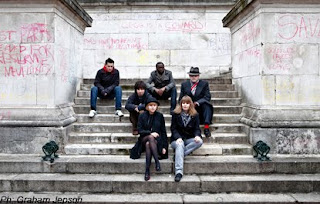
For a month, we seem to have been cast in a tide of student protest — but not one of the big marches since the invasion of Millbank on November 10 has been organised by the NUS. Into the fray have come a slew of homemade placards and new organisations including the National Campaign against Fees and Cuts (NCFC), the Free Education Campaign, Schools and FE Students against the Cuts, and local equivalents.
“I don’t know how it happened,” says Joana Oliveira Pinto about the NCFC, which was founded in February. “It’s not hegenomic, more like a parliament.”
The London Student Assembly, formed this autumn, convened last Friday to set up a national organisation. Occupations at London universities were carried out by groups independently of their student union leadership.
There is a widespread sense that NUS president Aaron Porter has been weak and has sold out. Politics PhD student and Opendemocracy blogger Guy Aitchison blames him for “forfeiting moral and political leadership” because of his over-the-top condemnation of the Millbank protests and then for “going back on his promise to support the occupations in the most deeply irresponsible way” (he attempted to strike a deal over fees with ministers). A campaign for a vote of no confidence in him is afoot.
“Students organising things on campuses often have been previously active with their student union, or People & Planet, or one of the political parties,” suggests Green/Left campaigner Adam Ramsay. “But they are getting things going themselves in the absence of national leadership, inspired by things happening at other campuses, organising using a procedure of consensus decision-making invented by the anti-globalisation protest movement”.
Specifically, Climate Camp, the annual gathering of youthful green protesters, has supplied a pre-existing network and a non-violent direct action philosophy.
UK Uncut, an anti-tax avoidance protest group which has grabbed headlines for its occupations of Vodafone shops, is seen as an explicit model by campus activists like UCL’s Jon Moses. English undergrad Tom Dillon, stung by political betrayal, describes going from a common room occupation to a UK Uncut flash-mob. “There is an alternative to cuts but politicians are ignoring it”. Online journalist Ellie Mae has been running the group’s protests in Liverpool before handing over the reins as she relocates to London. The target of tax avoidance appeals to her British sense of fair play. “I don’t respond well to big group activities,” she says. “I don’t even see myself as an activist.” She is right behind tuition fees protests — “by any standards, £21,000 is a phenomenal amount” — though for her and many others the abolition of the Education Maintenance Allowance (EMA) for low-income sixth-formers is even more significant.
Shiv Malik, 29-year-old author of The Jilted Generation, views wryly the debate about whether the protesters are anarchists or socialists. “They are very much Thatcher’s children — they believe in freedom, individualism and have no solid ideology. They are out there for more than education cuts.”
In what Malik brands the “hashtag revolution”, Twitter has been crucial in organising and shaping protests, frustrating police by directing hundreds of people to make a move in a particular direction. New web initiatives have helped assemble petitions and allowed supporters to post footage of independent actions they have embarked on.
The hub of the university occupations were teams on computers co-ordinating a mass lobby of wavering Lib-Dem MPs. But the anti-fees and cuts movement has married the white heat of technology with traditional methods — the open meeting where people come and freely debate; tub-thumping open lectures held by SOAS academics and Goldsmiths students in locations ranging from a bank to the St Pancras concourse. The UCL occupation delighted visitors with the bohemianism of its handmade posters and communal kitchen. Bands and comics have played protest gigs. Josie Long, darling of the indie comedy scene, is an ardent backer of the movement and its “organised, sane, fun” supporters who she feels have been traduced by a hostile media.
Any accusation the movement is narrowly middle-class can be countered by the battle to save the EMA. One of the leading figures in this is James Mills, a young working-class Londoner and Lib-Dem parliamentary researcher who went from tough Gunnersbury School to St Andrews at the same time as Prince William. Meanwhile, many student and graduate activists vouch modestly that school-age protesters have been more positive and creative in their campaigning than they have, spontaneously occupying sixth forms at the risk of exclusion from school. They pay tribute by seeing their protests as part of a duty of care to younger generations which MPs have manifestly failed to show.
Given the electoral arithmetic, commentators tend to see a fees rise as a fait accompli. But the grassroots movement is not discouraged — and has rallied behind protester Jody McIntyre after his harsh treatment on TV. James Haywood of Goldsmiths looks enviously to Rome where protesters have occupied railway tracks, bringing the city to a halt.
Many protesters are clearly in it for the long haul. “I’m 100 per cent committed — I don’t think I could sleep at night if I wasn’t involved,” says Josie Long. Or as graduate student Benjamin Weiss, involved in occupations in London and Cambridge, vows: “We’ve made our presence felt with fees. When it comes to the NHS we will be there too”.
Six Angry Young Men and Women, By Ben Bryant
Pictured above, from top left
James Haywood, 23
Used to want to be an academic, but says that now he can’t afford it. Worked as a butcher for two years before attending Goldsmiths College to study history. He is Campaigns Officer of the Students’ Union there.
Kanja Sesay, 22
Born in Sierra Leone, living through 11 years of civil war and coups d’etat. Came to England in 1999 and studied law and history at Bradford University. He is NUS Black Students’ Officer and a vocal critic of NUS President Aaron Porter.
Sean Rillo Raczka, 28
Activism runs in his family – his grandfather were both trade unionists. He left school at 16 and worked in admin before going to university at 26. He is chair of Birkbeck Students’ Union and NUS NEC Mature Students’ Rep.
Fiona Edwards, 23
Father a builder. Went to Worcester comprehensive, studied politics at Sheffield and became Women’s Officer. Involved in campaigning groups including Free Education Campaign and Student Broad Left.
Marie Leconte, 18
French student from Nantes now at the University of Westminster who attended the UCL occupation.
Jon Moses, 21
Father a geophysicist. Went to private school in Monmouth. Graduated this year from UCL in history. Stalwart of the UCL occupation and member of the National Campaign Against Fees and Cuts.
Student protesters are breaking away from their official union into new, more militant groups. Fresh leaders are emerging and Joshua Neicho has been meeting them.

For a month, we seem to have been cast in a tide of student protest — but not one of the big marches since the invasion of Millbank on November 10 has been organised by the NUS. Into the fray have come a slew of homemade placards and new organisations including the National Campaign against Fees and Cuts (NCFC), the Free Education Campaign, Schools and FE Students against the Cuts, and local equivalents.
“I don’t know how it happened,” says Joana Oliveira Pinto about the NCFC, which was founded in February. “It’s not hegenomic, more like a parliament.”
The London Student Assembly, formed this autumn, convened last Friday to set up a national organisation. Occupations at London universities were carried out by groups independently of their student union leadership.
There is a widespread sense that NUS president Aaron Porter has been weak and has sold out. Politics PhD student and Opendemocracy blogger Guy Aitchison blames him for “forfeiting moral and political leadership” because of his over-the-top condemnation of the Millbank protests and then for “going back on his promise to support the occupations in the most deeply irresponsible way” (he attempted to strike a deal over fees with ministers). A campaign for a vote of no confidence in him is afoot.
“Students organising things on campuses often have been previously active with their student union, or People & Planet, or one of the political parties,” suggests Green/Left campaigner Adam Ramsay. “But they are getting things going themselves in the absence of national leadership, inspired by things happening at other campuses, organising using a procedure of consensus decision-making invented by the anti-globalisation protest movement”.
Specifically, Climate Camp, the annual gathering of youthful green protesters, has supplied a pre-existing network and a non-violent direct action philosophy.
UK Uncut, an anti-tax avoidance protest group which has grabbed headlines for its occupations of Vodafone shops, is seen as an explicit model by campus activists like UCL’s Jon Moses. English undergrad Tom Dillon, stung by political betrayal, describes going from a common room occupation to a UK Uncut flash-mob. “There is an alternative to cuts but politicians are ignoring it”. Online journalist Ellie Mae has been running the group’s protests in Liverpool before handing over the reins as she relocates to London. The target of tax avoidance appeals to her British sense of fair play. “I don’t respond well to big group activities,” she says. “I don’t even see myself as an activist.” She is right behind tuition fees protests — “by any standards, £21,000 is a phenomenal amount” — though for her and many others the abolition of the Education Maintenance Allowance (EMA) for low-income sixth-formers is even more significant.
Shiv Malik, 29-year-old author of The Jilted Generation, views wryly the debate about whether the protesters are anarchists or socialists. “They are very much Thatcher’s children — they believe in freedom, individualism and have no solid ideology. They are out there for more than education cuts.”
In what Malik brands the “hashtag revolution”, Twitter has been crucial in organising and shaping protests, frustrating police by directing hundreds of people to make a move in a particular direction. New web initiatives have helped assemble petitions and allowed supporters to post footage of independent actions they have embarked on.
The hub of the university occupations were teams on computers co-ordinating a mass lobby of wavering Lib-Dem MPs. But the anti-fees and cuts movement has married the white heat of technology with traditional methods — the open meeting where people come and freely debate; tub-thumping open lectures held by SOAS academics and Goldsmiths students in locations ranging from a bank to the St Pancras concourse. The UCL occupation delighted visitors with the bohemianism of its handmade posters and communal kitchen. Bands and comics have played protest gigs. Josie Long, darling of the indie comedy scene, is an ardent backer of the movement and its “organised, sane, fun” supporters who she feels have been traduced by a hostile media.
Any accusation the movement is narrowly middle-class can be countered by the battle to save the EMA. One of the leading figures in this is James Mills, a young working-class Londoner and Lib-Dem parliamentary researcher who went from tough Gunnersbury School to St Andrews at the same time as Prince William. Meanwhile, many student and graduate activists vouch modestly that school-age protesters have been more positive and creative in their campaigning than they have, spontaneously occupying sixth forms at the risk of exclusion from school. They pay tribute by seeing their protests as part of a duty of care to younger generations which MPs have manifestly failed to show.
Given the electoral arithmetic, commentators tend to see a fees rise as a fait accompli. But the grassroots movement is not discouraged — and has rallied behind protester Jody McIntyre after his harsh treatment on TV. James Haywood of Goldsmiths looks enviously to Rome where protesters have occupied railway tracks, bringing the city to a halt.
Many protesters are clearly in it for the long haul. “I’m 100 per cent committed — I don’t think I could sleep at night if I wasn’t involved,” says Josie Long. Or as graduate student Benjamin Weiss, involved in occupations in London and Cambridge, vows: “We’ve made our presence felt with fees. When it comes to the NHS we will be there too”.
Six Angry Young Men and Women, By Ben Bryant
Pictured above, from top left
James Haywood, 23
Used to want to be an academic, but says that now he can’t afford it. Worked as a butcher for two years before attending Goldsmiths College to study history. He is Campaigns Officer of the Students’ Union there.
Kanja Sesay, 22
Born in Sierra Leone, living through 11 years of civil war and coups d’etat. Came to England in 1999 and studied law and history at Bradford University. He is NUS Black Students’ Officer and a vocal critic of NUS President Aaron Porter.
Sean Rillo Raczka, 28
Activism runs in his family – his grandfather were both trade unionists. He left school at 16 and worked in admin before going to university at 26. He is chair of Birkbeck Students’ Union and NUS NEC Mature Students’ Rep.
Fiona Edwards, 23
Father a builder. Went to Worcester comprehensive, studied politics at Sheffield and became Women’s Officer. Involved in campaigning groups including Free Education Campaign and Student Broad Left.
Marie Leconte, 18
French student from Nantes now at the University of Westminster who attended the UCL occupation.
Jon Moses, 21
Father a geophysicist. Went to private school in Monmouth. Graduated this year from UCL in history. Stalwart of the UCL occupation and member of the National Campaign Against Fees and Cuts.
Friday, December 17, 2010
Open Letter: Let’s organize together a united conference for free education and against education cuts
Dear friends,
We write to propose a united national conference against education cuts and for free education and to invite student campaigning organisations and occupations to be a co-organiser of this.
Whilst groups and occupations will continue to organize a whole range of local, regional and national activities - which will continue to put the Tory-led government under considerable pressure – we believe that a national, unified conference will strengthen the whole movement. We believe there is considerable enthusiasm amongst students for such an initiative.
The aim would be to have a united national conference in the next academic term organised by all those campaigns, Student Unions and sections of NUS, and occupations that have so successfully organised actions over recent weeks against higher fees and education cuts following the NUS leaderships' failure to build on the successful national demo of November 10.
To this end we believe representatives from all participating groups should meet at a convenient time and place in the week beginning Monday 10th January 2011.
We hope that you will able to participate in this initiative which we believe will facilitate greater collaboration between all those who wish to seriously fight to defend our education.
In solidarity,
Free Education Campaign
We write to propose a united national conference against education cuts and for free education and to invite student campaigning organisations and occupations to be a co-organiser of this.
Whilst groups and occupations will continue to organize a whole range of local, regional and national activities - which will continue to put the Tory-led government under considerable pressure – we believe that a national, unified conference will strengthen the whole movement. We believe there is considerable enthusiasm amongst students for such an initiative.
The aim would be to have a united national conference in the next academic term organised by all those campaigns, Student Unions and sections of NUS, and occupations that have so successfully organised actions over recent weeks against higher fees and education cuts following the NUS leaderships' failure to build on the successful national demo of November 10.
To this end we believe representatives from all participating groups should meet at a convenient time and place in the week beginning Monday 10th January 2011.
We hope that you will able to participate in this initiative which we believe will facilitate greater collaboration between all those who wish to seriously fight to defend our education.
In solidarity,
Free Education Campaign
Wednesday, December 15, 2010
It is time to go Aaron Porter – we need a fighting NUS
Students need a fighting NUS to take on the Tory cuts.
“We the undersigned believe that Aaron Porter should be removed as NUS National President as he is unable to lead the student movement. His failure to call or even back another National Demonstration, his refusal to back up his promises of support for occupations, his weak stance on police brutality and his collusion with the Government in identifying cuts means that he has lost the confidence of the movement.
We call on activists to bring motions to their SUs calling for his removal and an Extraordinary Conference to do so.”
Signed in a personal capacity:
Sean Rillo Raczka, NUS NEC and Chair of Birkbeck SU
Clare Solomon, ULU President
Fiona Edwards, Student Broad Left
Joshi Sachdeo, NUS NEC
Ashok Kumar, LSE Education Officer
Mary Robertston, Free Education Campaign & SOAS Occupier
Javed Anjum Sheikh, NUS NEC
Poggy Murray, NUS Black Student Committee & Liverpool Guild of Students LGBT Officer
To add your name email: seanrillo@hotmail.com
* * * *
MOTION OF NO CONFIDENCE IN AARON PORTER
THIS UNION NOTES:
1. That on the 9/12/10 over 30,000 students marched from the University of London Union (ULU) to Parliament in a protest against fees and cuts on the day of the vote to raise tuition fees.
2. That the National Union of Students organised a candlelight vigil and rally in Victoria Embankment with under 1,000 attending.
3. That the NUS NEC, in a proposal made by NUS President Aaron Porter, voted NOT to back the march from ULU.
4. That Aaron Porter stated he was ‘not at all proud’ of the ULU protest.
5. That the co-ordinators of the NUS Rally at Victoria Embankment urged those in attendance to return home immediately afterwards and not to join the protest in Parliament Square.
6. That violent police tactics including kettling, horse charges and the use of batons were deployed by the Met, leaving over 43 protestors injured or hospitalised, including one life threatening injury.
7. That the NUS has not put out an official statement condemning the police violence towards students on the 9th of December, standing up for their right to protest and not be illegally kettled or charged by horses.
8. That Aaron Porter recently visited the UCL Occupation where he stated that the NUS would provide support for those in occupation, as well as calling a National Demonstration on the day of the fees vote.
9. That at the UCL Occupation meeting Aaron Porter admitted that the NUS had been ‘spineless’ and ‘dithering’ in response the student occupations.
10. That Aaron Porter has reneged on both promises mentioned above (8).
THE UNION FURTHER NOTES:
1. That emails leaked to the Daily Telegraph show that the NUS had put models of alternative cuts to Ministers, outlining where cuts could be made to the Higher Education budget without raising tuition fees. These plans included cutting grants to the poorest students, and immediately charging a higher commercial rate on interest on student loans.
2. That the NUS response to this leak is to admit that they had ‘met with ministers and officials to discuss and model various potential impacts of cuts to Higher Education’
THIS UNION BELIEVES:
1. That the National Union of Students should not be in the business of modelling cuts for the ConDem Government or discussing possible ways of cutting grants from the poorest of students.
2. That the NUS National President should keep his promises.
3. That the NUS should organise another National Demo, and officially supporting and coordinating other demonstrations and protest.
4. That the NUS should give practical support to occupations and students affected by police violence.
5. That Aaron Porter, given his failure to assist students & occupation, and to coordinate or support further National Demonstrations against the cuts, and because of his helpful emails to the government, is incapable of leading the student movement.
THIS UNION RESOLVES:
1. That we have no confidence in Aaron Porter as NUS President.
2. To call for an Extraordinary Conference to hear this vote of no confidence.
“We the undersigned believe that Aaron Porter should be removed as NUS National President as he is unable to lead the student movement. His failure to call or even back another National Demonstration, his refusal to back up his promises of support for occupations, his weak stance on police brutality and his collusion with the Government in identifying cuts means that he has lost the confidence of the movement.
We call on activists to bring motions to their SUs calling for his removal and an Extraordinary Conference to do so.”
Signed in a personal capacity:
Sean Rillo Raczka, NUS NEC and Chair of Birkbeck SU
Clare Solomon, ULU President
Fiona Edwards, Student Broad Left
Joshi Sachdeo, NUS NEC
Ashok Kumar, LSE Education Officer
Mary Robertston, Free Education Campaign & SOAS Occupier
Javed Anjum Sheikh, NUS NEC
Poggy Murray, NUS Black Student Committee & Liverpool Guild of Students LGBT Officer
To add your name email: seanrillo@hotmail.com
* * * *
MOTION OF NO CONFIDENCE IN AARON PORTER
THIS UNION NOTES:
1. That on the 9/12/10 over 30,000 students marched from the University of London Union (ULU) to Parliament in a protest against fees and cuts on the day of the vote to raise tuition fees.
2. That the National Union of Students organised a candlelight vigil and rally in Victoria Embankment with under 1,000 attending.
3. That the NUS NEC, in a proposal made by NUS President Aaron Porter, voted NOT to back the march from ULU.
4. That Aaron Porter stated he was ‘not at all proud’ of the ULU protest.
5. That the co-ordinators of the NUS Rally at Victoria Embankment urged those in attendance to return home immediately afterwards and not to join the protest in Parliament Square.
6. That violent police tactics including kettling, horse charges and the use of batons were deployed by the Met, leaving over 43 protestors injured or hospitalised, including one life threatening injury.
7. That the NUS has not put out an official statement condemning the police violence towards students on the 9th of December, standing up for their right to protest and not be illegally kettled or charged by horses.
8. That Aaron Porter recently visited the UCL Occupation where he stated that the NUS would provide support for those in occupation, as well as calling a National Demonstration on the day of the fees vote.
9. That at the UCL Occupation meeting Aaron Porter admitted that the NUS had been ‘spineless’ and ‘dithering’ in response the student occupations.
10. That Aaron Porter has reneged on both promises mentioned above (8).
THE UNION FURTHER NOTES:
1. That emails leaked to the Daily Telegraph show that the NUS had put models of alternative cuts to Ministers, outlining where cuts could be made to the Higher Education budget without raising tuition fees. These plans included cutting grants to the poorest students, and immediately charging a higher commercial rate on interest on student loans.
2. That the NUS response to this leak is to admit that they had ‘met with ministers and officials to discuss and model various potential impacts of cuts to Higher Education’
THIS UNION BELIEVES:
1. That the National Union of Students should not be in the business of modelling cuts for the ConDem Government or discussing possible ways of cutting grants from the poorest of students.
2. That the NUS National President should keep his promises.
3. That the NUS should organise another National Demo, and officially supporting and coordinating other demonstrations and protest.
4. That the NUS should give practical support to occupations and students affected by police violence.
5. That Aaron Porter, given his failure to assist students & occupation, and to coordinate or support further National Demonstrations against the cuts, and because of his helpful emails to the government, is incapable of leading the student movement.
THIS UNION RESOLVES:
1. That we have no confidence in Aaron Porter as NUS President.
2. To call for an Extraordinary Conference to hear this vote of no confidence.
Tuesday, December 14, 2010
BBC interview: Student Jody McIntyre exposes media campaign to undermine student protest
Student protester Jody McIntyre was dragged from his wheelchair by police during last week’s protest in London in yet another shock display of police violence.
Jody’s interview on the BBC exposes the media campaign to undermine student protest. The clip also reveals the disgusting attempt by the right wing media to present the victims of violence as the perpetrators.
Act now: Call the BBC on 03700 100 222 to complain about the Ben Brown interview with Jody McIntyre. The BBC must respond to every complaint received. Fight the right wing media’s campaign to undermine student protest.
Jody’s interview on the BBC exposes the media campaign to undermine student protest. The clip also reveals the disgusting attempt by the right wing media to present the victims of violence as the perpetrators.
Act now: Call the BBC on 03700 100 222 to complain about the Ben Brown interview with Jody McIntyre. The BBC must respond to every complaint received. Fight the right wing media’s campaign to undermine student protest.
Monday, December 13, 2010
The Day of the Vote – an eyewitness account by Aaron Kiely
By Aaron Kiely, University of Kent Occupation
Firstly, I have to state that I am a member of Labour Party, a candidate in the upcoming local elections, a Committee member of the NUS Black Students’ Campaign and an elected representative of Kent Students’ Union; I would never act in a way to damage the reputation of any of these organisations as I am proud to contribute and participate in them and I am conscious that at this protest I represent all the students who elected me locally, nationally as well as fellow residents in my local Labour Party.
What I witnessed and experienced at Parliament Square was absolutely horrific, and the levels of police brutality and indiscriminate violence were made all the more shocking due to the the fact that a very large proportion of those who attended the march from Malet Street to outside Parliament were young, either Further Education students or school students, and a very visible and large number were Black students.
The protest started absolutely peacefully, and I joined the march at Trafalgar Square and made the short journey to Parliament at around 1:30pm with other Kent students. I made my way to the front of the demonstration and as students were pushing to make their way closer to Parliament, made sure that students that wanted to move to the back were allowed to do so, as well as making sure that people were not being hurt in the push. I think it is important that we demonstrate as close as possible to Parliament as we can, as MPs were in the Palace and hopefully would’ve been able to hear our chants calling for them to not betray students and future generations by voting for the removal of the current cap in favour of variable fees of up to £9,000 a year. The atmosphere was wholly positive, with impressively creatively placards, chants and a real strength of diversity in the Trade Union and Student Union banners, from the CWU, to Unite to LSE, to SOAS Unison to Manchester Met and many others.
After over an hour, after discussing with other friends at the demonstration it was thought that we could pop out for a bite to eat and come back to whatever action is taking place. So at around 2:30 to 3:00pm we went to leave, only to find that we had been ‘kettled’ in by the police and exits were sealed. SOAS University students quickly erected a ‘Kettle Cafe’ where those trapped could get some food and drink. I made it very clear to students from Kent who were going to attend the day that there was a strong likelihood that the police would use the kettling ‘tactic’, and they freely choose to come. For any of those who do not know what kettling is – it is basically where the riot police surround a group of protesters to ‘control the situation’. What is conveniently forgotten in the official description is that kettling often lasts for hours, with some school students having to endure the freezing cold for 9 hours just for being there. It is a collective form of punishment, where those who are kettled, no matter how peaceful or well intentioned are denied access to basic freedoms such as food, water, shelter, the freedom to move as well as access to clean sanitation. This tactic, has come under increased scrutiny, yet it is continually used, when I would argue it acts as a catalyst to anger people and does nothing to ‘control the situation’, instead provoking and setting up an ‘us and them’ scenario between the police and protesters.
We were denied access to the above mentioned rights, despite the police and media portraying that they were available for a combined total of 8 hours on a chilly Winter’s day. A tarpaulin was set up in the form of a cubicle so that men (not women) could urinate on the grass, turning it in to a slurry of mud and piss. I could find no portaloos, nowhere to access food and water and the riot police were not responding to requests for these requirements to be met as well as the basic request to leave the area. It is no wonder why those there were agitated and furious with their treatment by the authorities. Calmly requesting something from a riot police officer is often as productive as drawing blood from a stone as you are deliberately ignored, and sometimes, officers will communicate that they cannot hear what you are saying, despite being able to have conversations freely with nearby officers.
Eventually, the exits were fully manned by riot police, with police on horses charging young students and full riot gear in use, meaning truncheons (a blunt club weapon), specialist helmets and riot shields. I witnessed an officer repeatedly hitting a ‘Robin Hood Tax’ hardhat with his riot shield off the head of a protester and then proceeding to hit him, without the protection of the hardhat once more for good measure. I also witnessed a young, smartly-dressed woman, who could be no older than 16 being hit with a truncheon to the head, to much shock. She posed absolutely no threat, was not being verbally abusive, nor physically threatening, yet she was smashed across the head indiscriminately, her head drooped and she was taken back in to the crowd to be treated by St. John’s Ambulance staff. At one point, many protesters broke through and made it to Whitehall, it looked like we could get out as well and during the several attempts of the crowd to push, with hands in the air the police beat us back violently holding riot shields horizontally and hitting at the crowd. It was at this point I was first hit on the back with a truncheon, having been pushed to the front with my back turned. I did not react, did not say one word of abuse and maintained my composure. The second and third time I was hit with a truncheon across my forearm and shoulder was when I stumbled across a young man whose head had just been cracked open and was gushing with blood. His light-coloured hoody was distinctive against the vivid red of the blood coming from him. Again, I kept my composure and was then kicked with no reason, with my hands in the air, silent, and the kick was so hard that it has left an imprint of the sole of the shoe on my leg. This not only happened to me, but many others, young people as well.
The logical question to ask is ‘how did you get to the front’? ‘Why risk being hit and injured?’ – these are absolutely valid points but I will say this: I am not prepared to stand to the side and watch young students, many from ethnic minorities and particularly young women who perhaps might have of been pushed to the front having their heads cracked open. I would rather it was me than ever having to live with the thought that someone else was seriously injured when I could have taken the hit much better. Seeing young students, who have been kettled, treated inhumanely and stained by their own blood is an appalling sight and something I would never wish anyone to see as it is hugely distressing. The people at that demonstration could’ve been my 19 year old sister protesting against her EMA being cut, or my 15 year old cousin who dreamed of going to University but could never pay off their £9,000 a year fees. I firmly believe that older demonstrators have a duty to protect those who we have encouraged and helped mobilise to protests and there were many more experienced activists helping younger people out. The vast and overwhelming majority of people were armed with words, not weapons, not truncheons, not riot shields and definitely not heavy duty protective clothing and specialist helmets; the brutality of the police at this demonstration has to be exposed for what it is, absolutely despicable.
During the coming hours, students set fire to placards for warmth, shared food and drink as none had been provided and later, SOAS students kindly sprayed disinfectant on my small cut from the riot shield. At around 8:30pm, after much back and forth and conflicting information from non-riot police who had entered the kettle, it was established that we would be released soon. All throughout this, I was polite to every single police officer and I saw none of the ordinary unarmed police officers subjected to any harassment or intimidation. Eventually we were allowed to leave the kettle, escorted across Westminster Bridge following a line of police who were slowly moving back until we stopped at the end of the bridge. We were anticipating that we would then be allowed to disperse in three separate directions, perhaps through a bottleneck, however were treated with silence for an hour. We had been stopped in our tracks. In the cold, dark night, thousands of protesters were held on Westminster Bridge, with no access to toilets or water and were packed like sardines with barely any space to move. It was then announced by the police that there were not enough riot police to handle the departure of those who had been trying to leave for hours. Eventually another hour later at 10:55 pm we were allowed out, in single-file, surrounded by riot police and told that Section 60 was in action and that we should move continuously towards Waterloo Station.
After hours upon hours of being kettled, we were finally free to make our way home. However, it is important to remember that many of us had been booked on coaches which had fixed departure times, so many had to make their own way homes – potentially leaving young members vulnerable as we edge towards midnight in the capital. If students had been allowed to leave, as the vast majority had requested or queued up to do, then this situation could have been entirely avoidable. I wrote this to explain how I experienced the demonstration and to condemn the police-handling of the event as excessive, brutal and unnecessary – kettling has to be stopped as it a violation of basic human rights and does nothing to control the situation, only inflame it.
I have to give a special thanks to Kent Union staff and leadership who managed to get the coach to wait, although it ultimately couldn’t wait enough, as well as their support on Twitter, text messages and calls. It is to be praised and they handled it all very professionally and I thank them for doing what they could in a very difficult situation.
I would also like to thank Zain Sardar, Jonathan Buckner and Andy Hewett who I spent most of the time in the kettle with for their company and support. I would also like to especially thank Maham Hashmi-Khan, from one Black Students’ Committee member to another, as she was exemplary in helping to remove hazards, helping students leave, giving advice and standing witness at the front to the violence inflicted on the demonstrators by the police as well as making sure students were as safe as she could. And a further thanks to all the retweets, all of the messages of support and the calls from so many different people – it made a lot of difference knowing people were working on the outside to pressure the police and spread awareness of what they were doing to us.
The people on that demonstration were not violent or extremist thugs intent on hurting others, the vast majority were peaceful and youthful, yet angry at what the Coalition government are doing. What kind of democracy do we live in, when young people are brutalised by the police outside of Parliament, while inside a government votes through symbolically violent acts which amount to vandalism of hopes and dreams? I will always stand side-by-side with those suffering such huge injustices and I invite you all to come to the next demonstration, which I am sure will be about saving EMA. As although we have lost the vote on the raising of the cap, we are in this struggle for the long haul, and it will take all of us to contribute in whatever way we can, through lobbying, industrial action, vigils, demonstrations and occupations because we have an obligation to leave a better legacy to the next generation, not a worse one.
Aaron Kiely is a Kent Union Ordinary Council Member; NUS Black Students’ Campaign Committee (Open Place); Member of the University of Kent Occupation
Firstly, I have to state that I am a member of Labour Party, a candidate in the upcoming local elections, a Committee member of the NUS Black Students’ Campaign and an elected representative of Kent Students’ Union; I would never act in a way to damage the reputation of any of these organisations as I am proud to contribute and participate in them and I am conscious that at this protest I represent all the students who elected me locally, nationally as well as fellow residents in my local Labour Party.
What I witnessed and experienced at Parliament Square was absolutely horrific, and the levels of police brutality and indiscriminate violence were made all the more shocking due to the the fact that a very large proportion of those who attended the march from Malet Street to outside Parliament were young, either Further Education students or school students, and a very visible and large number were Black students.
The protest started absolutely peacefully, and I joined the march at Trafalgar Square and made the short journey to Parliament at around 1:30pm with other Kent students. I made my way to the front of the demonstration and as students were pushing to make their way closer to Parliament, made sure that students that wanted to move to the back were allowed to do so, as well as making sure that people were not being hurt in the push. I think it is important that we demonstrate as close as possible to Parliament as we can, as MPs were in the Palace and hopefully would’ve been able to hear our chants calling for them to not betray students and future generations by voting for the removal of the current cap in favour of variable fees of up to £9,000 a year. The atmosphere was wholly positive, with impressively creatively placards, chants and a real strength of diversity in the Trade Union and Student Union banners, from the CWU, to Unite to LSE, to SOAS Unison to Manchester Met and many others.
After over an hour, after discussing with other friends at the demonstration it was thought that we could pop out for a bite to eat and come back to whatever action is taking place. So at around 2:30 to 3:00pm we went to leave, only to find that we had been ‘kettled’ in by the police and exits were sealed. SOAS University students quickly erected a ‘Kettle Cafe’ where those trapped could get some food and drink. I made it very clear to students from Kent who were going to attend the day that there was a strong likelihood that the police would use the kettling ‘tactic’, and they freely choose to come. For any of those who do not know what kettling is – it is basically where the riot police surround a group of protesters to ‘control the situation’. What is conveniently forgotten in the official description is that kettling often lasts for hours, with some school students having to endure the freezing cold for 9 hours just for being there. It is a collective form of punishment, where those who are kettled, no matter how peaceful or well intentioned are denied access to basic freedoms such as food, water, shelter, the freedom to move as well as access to clean sanitation. This tactic, has come under increased scrutiny, yet it is continually used, when I would argue it acts as a catalyst to anger people and does nothing to ‘control the situation’, instead provoking and setting up an ‘us and them’ scenario between the police and protesters.
We were denied access to the above mentioned rights, despite the police and media portraying that they were available for a combined total of 8 hours on a chilly Winter’s day. A tarpaulin was set up in the form of a cubicle so that men (not women) could urinate on the grass, turning it in to a slurry of mud and piss. I could find no portaloos, nowhere to access food and water and the riot police were not responding to requests for these requirements to be met as well as the basic request to leave the area. It is no wonder why those there were agitated and furious with their treatment by the authorities. Calmly requesting something from a riot police officer is often as productive as drawing blood from a stone as you are deliberately ignored, and sometimes, officers will communicate that they cannot hear what you are saying, despite being able to have conversations freely with nearby officers.
Eventually, the exits were fully manned by riot police, with police on horses charging young students and full riot gear in use, meaning truncheons (a blunt club weapon), specialist helmets and riot shields. I witnessed an officer repeatedly hitting a ‘Robin Hood Tax’ hardhat with his riot shield off the head of a protester and then proceeding to hit him, without the protection of the hardhat once more for good measure. I also witnessed a young, smartly-dressed woman, who could be no older than 16 being hit with a truncheon to the head, to much shock. She posed absolutely no threat, was not being verbally abusive, nor physically threatening, yet she was smashed across the head indiscriminately, her head drooped and she was taken back in to the crowd to be treated by St. John’s Ambulance staff. At one point, many protesters broke through and made it to Whitehall, it looked like we could get out as well and during the several attempts of the crowd to push, with hands in the air the police beat us back violently holding riot shields horizontally and hitting at the crowd. It was at this point I was first hit on the back with a truncheon, having been pushed to the front with my back turned. I did not react, did not say one word of abuse and maintained my composure. The second and third time I was hit with a truncheon across my forearm and shoulder was when I stumbled across a young man whose head had just been cracked open and was gushing with blood. His light-coloured hoody was distinctive against the vivid red of the blood coming from him. Again, I kept my composure and was then kicked with no reason, with my hands in the air, silent, and the kick was so hard that it has left an imprint of the sole of the shoe on my leg. This not only happened to me, but many others, young people as well.
The logical question to ask is ‘how did you get to the front’? ‘Why risk being hit and injured?’ – these are absolutely valid points but I will say this: I am not prepared to stand to the side and watch young students, many from ethnic minorities and particularly young women who perhaps might have of been pushed to the front having their heads cracked open. I would rather it was me than ever having to live with the thought that someone else was seriously injured when I could have taken the hit much better. Seeing young students, who have been kettled, treated inhumanely and stained by their own blood is an appalling sight and something I would never wish anyone to see as it is hugely distressing. The people at that demonstration could’ve been my 19 year old sister protesting against her EMA being cut, or my 15 year old cousin who dreamed of going to University but could never pay off their £9,000 a year fees. I firmly believe that older demonstrators have a duty to protect those who we have encouraged and helped mobilise to protests and there were many more experienced activists helping younger people out. The vast and overwhelming majority of people were armed with words, not weapons, not truncheons, not riot shields and definitely not heavy duty protective clothing and specialist helmets; the brutality of the police at this demonstration has to be exposed for what it is, absolutely despicable.
During the coming hours, students set fire to placards for warmth, shared food and drink as none had been provided and later, SOAS students kindly sprayed disinfectant on my small cut from the riot shield. At around 8:30pm, after much back and forth and conflicting information from non-riot police who had entered the kettle, it was established that we would be released soon. All throughout this, I was polite to every single police officer and I saw none of the ordinary unarmed police officers subjected to any harassment or intimidation. Eventually we were allowed to leave the kettle, escorted across Westminster Bridge following a line of police who were slowly moving back until we stopped at the end of the bridge. We were anticipating that we would then be allowed to disperse in three separate directions, perhaps through a bottleneck, however were treated with silence for an hour. We had been stopped in our tracks. In the cold, dark night, thousands of protesters were held on Westminster Bridge, with no access to toilets or water and were packed like sardines with barely any space to move. It was then announced by the police that there were not enough riot police to handle the departure of those who had been trying to leave for hours. Eventually another hour later at 10:55 pm we were allowed out, in single-file, surrounded by riot police and told that Section 60 was in action and that we should move continuously towards Waterloo Station.
After hours upon hours of being kettled, we were finally free to make our way home. However, it is important to remember that many of us had been booked on coaches which had fixed departure times, so many had to make their own way homes – potentially leaving young members vulnerable as we edge towards midnight in the capital. If students had been allowed to leave, as the vast majority had requested or queued up to do, then this situation could have been entirely avoidable. I wrote this to explain how I experienced the demonstration and to condemn the police-handling of the event as excessive, brutal and unnecessary – kettling has to be stopped as it a violation of basic human rights and does nothing to control the situation, only inflame it.
I have to give a special thanks to Kent Union staff and leadership who managed to get the coach to wait, although it ultimately couldn’t wait enough, as well as their support on Twitter, text messages and calls. It is to be praised and they handled it all very professionally and I thank them for doing what they could in a very difficult situation.
I would also like to thank Zain Sardar, Jonathan Buckner and Andy Hewett who I spent most of the time in the kettle with for their company and support. I would also like to especially thank Maham Hashmi-Khan, from one Black Students’ Committee member to another, as she was exemplary in helping to remove hazards, helping students leave, giving advice and standing witness at the front to the violence inflicted on the demonstrators by the police as well as making sure students were as safe as she could. And a further thanks to all the retweets, all of the messages of support and the calls from so many different people – it made a lot of difference knowing people were working on the outside to pressure the police and spread awareness of what they were doing to us.
The people on that demonstration were not violent or extremist thugs intent on hurting others, the vast majority were peaceful and youthful, yet angry at what the Coalition government are doing. What kind of democracy do we live in, when young people are brutalised by the police outside of Parliament, while inside a government votes through symbolically violent acts which amount to vandalism of hopes and dreams? I will always stand side-by-side with those suffering such huge injustices and I invite you all to come to the next demonstration, which I am sure will be about saving EMA. As although we have lost the vote on the raising of the cap, we are in this struggle for the long haul, and it will take all of us to contribute in whatever way we can, through lobbying, industrial action, vigils, demonstrations and occupations because we have an obligation to leave a better legacy to the next generation, not a worse one.
Aaron Kiely is a Kent Union Ordinary Council Member; NUS Black Students’ Campaign Committee (Open Place); Member of the University of Kent Occupation
Sunday, December 12, 2010
Justice For Alfie Meadows
Alfie Meadows is a 20-year-old student from Middlesex who attended the tuition fees protest in central London on the 9th of December 2010.
He was beaten on the head with a police truncheon causing bleeding on the brain, as he attempted to leave the police kettle outside Parliament.
The mother of Alfie has described how police officers objected to her son being treated – with brain surgery – at the first hospital he was taken to. Only after the intervention of an ambulance worker did Alfie receive urgent medical treatment for the stroke he suffered after receiving his injury. The ambulance worker said, “If he hadn’t, Alfie would have been transferred and he could have died.”
Alfie has thankfully survived.
The Internal Police Complaints Commission (IPCC) has opened an investigation into the case and are appealing for help.
We support all campaigns to bring about justice for Alfie Meadows – those responsible for attacking him must be brought to justice. This should take place alongside a full investigation into the utterly appalling police violence and brutality against young protesters which took place on Thursday – and on student protests earlier this month.
The London Student Assembly Press Conference from Friday 10th December:
http://www.youtube.com/watch?v=Mvnz__bTgYA&feature=player_embedded
He was beaten on the head with a police truncheon causing bleeding on the brain, as he attempted to leave the police kettle outside Parliament.
The mother of Alfie has described how police officers objected to her son being treated – with brain surgery – at the first hospital he was taken to. Only after the intervention of an ambulance worker did Alfie receive urgent medical treatment for the stroke he suffered after receiving his injury. The ambulance worker said, “If he hadn’t, Alfie would have been transferred and he could have died.”
Alfie has thankfully survived.
The Internal Police Complaints Commission (IPCC) has opened an investigation into the case and are appealing for help.
We support all campaigns to bring about justice for Alfie Meadows – those responsible for attacking him must be brought to justice. This should take place alongside a full investigation into the utterly appalling police violence and brutality against young protesters which took place on Thursday – and on student protests earlier this month.
The London Student Assembly Press Conference from Friday 10th December:
http://www.youtube.com/watch?v=Mvnz__bTgYA&feature=player_embedded
Saturday, December 11, 2010
Teenagers charged by police horses outside Parliament whilst MPs vote away their future
Scenes of disgusting police violence & brutality against protesters played out on the streets outside Parliament in the bitter cold on Thursday. At the same time the Tories rammed through legislation to treble tuition fees - with the decisive support of half of the Lib Dem MPs.
The National Union of Students shamefully refused to organise a national demonstration of the day of the vote and has gone on the condemn the protest of tens of thousands that was organised by ULU and London Region UCU instead. The NUS also has failed to condemn the police brutality and violence against student protesters.
The University College Union (UCU) has issued the following statement about the protest on 9th December:
"The coalition government have won a vote but lost the argument over tuition fees.
Once again the democratic deficit in British society has been revealed as being as wide as ever.
The government that does not have a mandate for cuts and has ministers who were elected on the basis of opposition to tuition fee rises should be ashamed of themselves for ignoring the wishes of the overwhelming majority.
UCU is committed to non-violence but no-one should be shocked at the rage that young people showed at the betrayal of election promises and at their protest against cuts in EMA benefits and the raising of tuition fees.
UCU condemns the brutal attacks on our young people by riot police and calls for a TUC and public inquiry into police tactics.
UCU today reaffirms its wholehearted commitment to continue to defend education for all and calls upon the trade union movement to actively support legitimate forms of student protest."
The National Union of Students shamefully refused to organise a national demonstration of the day of the vote and has gone on the condemn the protest of tens of thousands that was organised by ULU and London Region UCU instead. The NUS also has failed to condemn the police brutality and violence against student protesters.
The University College Union (UCU) has issued the following statement about the protest on 9th December:
"The coalition government have won a vote but lost the argument over tuition fees.
Once again the democratic deficit in British society has been revealed as being as wide as ever.
The government that does not have a mandate for cuts and has ministers who were elected on the basis of opposition to tuition fee rises should be ashamed of themselves for ignoring the wishes of the overwhelming majority.
UCU is committed to non-violence but no-one should be shocked at the rage that young people showed at the betrayal of election promises and at their protest against cuts in EMA benefits and the raising of tuition fees.
UCU condemns the brutal attacks on our young people by riot police and calls for a TUC and public inquiry into police tactics.
UCU today reaffirms its wholehearted commitment to continue to defend education for all and calls upon the trade union movement to actively support legitimate forms of student protest."
Friday, December 3, 2010
Conference cancellation underlines unpopularity of Lib Dems fees policy
Friday 3rd December
London Liberal Democrats today faced the ignominy of having to cancel their prestigious annual London conference after two venues cancelled their booking to hold their conference on Saturday 4th December 2010.
Initially planned for Haverstock School in Camden, the head teacher refused permission to the Lib Dems to hold it at the school after demonstrators against the tuition fees rise and the abolition of Educational Maintenance Grant organised a protest at the school.
Two hours later, after advertising a new venue on their website, the Lib Dems were forced to accept that their toxic reputation meant that they would have to cancel their London conference when the second venue pulled out.
Protest organizer Fiona Edwards, of the Free Education Campaign, said:
“We now have 6 days to save our education. It is not too late for the Lib Dems to keep the promise they made to students that they would reject higher fees.
A free market in fees is a Tory policy cooked up by the heirs of Thatcher and the Lib Dems should not go along with it.”
Notes to Editor
1. This peaceful protest was being organized by the Free Education Campaign and supported by a range of organizations including the NUS Black Students’ Campaign, NUS LGBT Campaign, Compass Youth and others.
2. For all press enquiries contact Free Education Campaign Secretary Fiona Edwards on 07900922766. Email: freeeducationcampaign@gmail.com
The Free Education Campaign’s blog: http://freeeducationcampaign.blogspot.com
Twitter: @free_edcampaign
London Liberal Democrats today faced the ignominy of having to cancel their prestigious annual London conference after two venues cancelled their booking to hold their conference on Saturday 4th December 2010.
Initially planned for Haverstock School in Camden, the head teacher refused permission to the Lib Dems to hold it at the school after demonstrators against the tuition fees rise and the abolition of Educational Maintenance Grant organised a protest at the school.
Two hours later, after advertising a new venue on their website, the Lib Dems were forced to accept that their toxic reputation meant that they would have to cancel their London conference when the second venue pulled out.
Protest organizer Fiona Edwards, of the Free Education Campaign, said:
“We now have 6 days to save our education. It is not too late for the Lib Dems to keep the promise they made to students that they would reject higher fees.
A free market in fees is a Tory policy cooked up by the heirs of Thatcher and the Lib Dems should not go along with it.”
Notes to Editor
1. This peaceful protest was being organized by the Free Education Campaign and supported by a range of organizations including the NUS Black Students’ Campaign, NUS LGBT Campaign, Compass Youth and others.
2. For all press enquiries contact Free Education Campaign Secretary Fiona Edwards on 07900922766. Email: freeeducationcampaign@gmail.com
The Free Education Campaign’s blog: http://freeeducationcampaign.blogspot.com
Twitter: @free_edcampaign
Student protest threat forces out Lib Dem meeting
Report taken from the BBC website: http://www.bbc.co.uk/news/education-11911705
By Sean Coughlan - BBC News education correspondent
Threats of a student protest this weekend have forced a Liberal Democrat conference to abandon its planned venue in London.
The party's London MPs were to have met at a north London school on Saturday, but the head teacher has now cancelled the booking.
Head teacher of Haverstock School, John Dowd, said the risks from the protest were too great.
The Liberal Democrats say the meeting will now go ahead at another location.
Mr Dowd said it was clear from protest websites that there was going to be a demonstration against the Liberal Democrat MPs meeting at the school and he thought that it posed too great a risk.
Occupations
Fiona Edwards, speaking for the Free Education Campaign protest, said: "The cancellation of the venue for the conference is yet another sign of the deep unpopularity of the Liberal Democrats' policy on fees and is hugely embarrassing for the party."
The vote by MPs on whether to raise university fees in England to an upper limit of £9,000 will be held next week and a number of protests have been announced.
Liberal Democrats have become particular targets for student protests as their MPs had given students a signed pledge that they would vote against any increase in fees.
There has been a wave of protests and occupations in universities, against the fee increase and plans to cut public funding for many arts and humanities courses.
Students at the London School of Economics say there are now 400 people taking part in an occupation.
This weekend students are planning talks which will link the current wave of unrest with the protests of the 1960s - in which students at the London School of Economics played an iconic role.
'Desperately concerned'
There are also occupations taking place in universities including University College London, SOAS, Newcastle, King's College London, Leeds, Sheffield and Cambridge.
On Friday, the National Union of Students has sought to broaden the protest against fees by encouraging parents and families to write to MPs.
"Over the past few weeks I have been contacted by a great number of parents who are desperately concerned about how their children will be affected," says NUS president, Aaron Porter.
By Sean Coughlan - BBC News education correspondent
Threats of a student protest this weekend have forced a Liberal Democrat conference to abandon its planned venue in London.
The party's London MPs were to have met at a north London school on Saturday, but the head teacher has now cancelled the booking.
Head teacher of Haverstock School, John Dowd, said the risks from the protest were too great.
The Liberal Democrats say the meeting will now go ahead at another location.
Mr Dowd said it was clear from protest websites that there was going to be a demonstration against the Liberal Democrat MPs meeting at the school and he thought that it posed too great a risk.
Occupations
Fiona Edwards, speaking for the Free Education Campaign protest, said: "The cancellation of the venue for the conference is yet another sign of the deep unpopularity of the Liberal Democrats' policy on fees and is hugely embarrassing for the party."
The vote by MPs on whether to raise university fees in England to an upper limit of £9,000 will be held next week and a number of protests have been announced.
Liberal Democrats have become particular targets for student protests as their MPs had given students a signed pledge that they would vote against any increase in fees.
There has been a wave of protests and occupations in universities, against the fee increase and plans to cut public funding for many arts and humanities courses.
Students at the London School of Economics say there are now 400 people taking part in an occupation.
This weekend students are planning talks which will link the current wave of unrest with the protests of the 1960s - in which students at the London School of Economics played an iconic role.
'Desperately concerned'
There are also occupations taking place in universities including University College London, SOAS, Newcastle, King's College London, Leeds, Sheffield and Cambridge.
On Friday, the National Union of Students has sought to broaden the protest against fees by encouraging parents and families to write to MPs.
"Over the past few weeks I have been contacted by a great number of parents who are desperately concerned about how their children will be affected," says NUS president, Aaron Porter.
Press release: Lib Dems Can Run - But Never Hide
For Immediate Release
Friday 3rd December
Students, parents and public sector workers will demonstrate outside the hastily rearranged London Liberal Dem Conference tomorrow, Saturday 4th December 2010. The Liberal Democrats have been forced into rearranging their high profile London conference as a direct result of planned protests at the original venue that forced the venue to cancel the conference booking because it did not want to be associated with the Liberal Democrats Conference at this time.
Fiona Edwards, spokesperson for the Free Education Campaign, which was organising the protest said:
“No matter where the Liberal Democrats hold there meetings, conference and surgeries, they will face the anger and resentment of a generation who they have lied to.
The message we have for the Lib Dem MPs is that it is not too late to keep your promise.
A free market in fees is a Tory policy cooked up by the heirs of Thatcher and the Lib Dems should not go along with it.”
Notes to Editor
1. Protest outside London Lib Dem Conference – Saturday 4th December
Assemble 12noon – 3pm
Royal Horticultural Halls in Vincent Square, Greycoat Street London SW1P 2QD
Nearest tube Nearest tubes: St James Park; Westminster and Victoria
2. This peaceful protest is organized by the Free Education Campaign and supported by a range of organizations including the NUS Black Students’ Campaign, NUS LGBT Campaign, Compass Youth and others.
3. It is part of ongoing student campaign that has focused on pressuring the Liberal Democrats MPs to keep their pre-election promise to vote against higher tuition fees on Thursday 9th December.
4. For all press enquiries contact Free Education Campaign Secretary Fiona Edwards on 07900922766. Email: freeeducationcampaign@gmail.com
The Free Education Campaign’s blog: http://freeeducationcampaign.blogspot.com
Twitter: @free_edcampaign
Friday 3rd December
Students, parents and public sector workers will demonstrate outside the hastily rearranged London Liberal Dem Conference tomorrow, Saturday 4th December 2010. The Liberal Democrats have been forced into rearranging their high profile London conference as a direct result of planned protests at the original venue that forced the venue to cancel the conference booking because it did not want to be associated with the Liberal Democrats Conference at this time.
Fiona Edwards, spokesperson for the Free Education Campaign, which was organising the protest said:
“No matter where the Liberal Democrats hold there meetings, conference and surgeries, they will face the anger and resentment of a generation who they have lied to.
The message we have for the Lib Dem MPs is that it is not too late to keep your promise.
A free market in fees is a Tory policy cooked up by the heirs of Thatcher and the Lib Dems should not go along with it.”
Notes to Editor
1. Protest outside London Lib Dem Conference – Saturday 4th December
Assemble 12noon – 3pm
Royal Horticultural Halls in Vincent Square, Greycoat Street London SW1P 2QD
Nearest tube Nearest tubes: St James Park; Westminster and Victoria
2. This peaceful protest is organized by the Free Education Campaign and supported by a range of organizations including the NUS Black Students’ Campaign, NUS LGBT Campaign, Compass Youth and others.
3. It is part of ongoing student campaign that has focused on pressuring the Liberal Democrats MPs to keep their pre-election promise to vote against higher tuition fees on Thursday 9th December.
4. For all press enquiries contact Free Education Campaign Secretary Fiona Edwards on 07900922766. Email: freeeducationcampaign@gmail.com
The Free Education Campaign’s blog: http://freeeducationcampaign.blogspot.com
Twitter: @free_edcampaign
Press Release: Student protest forces Lib Dem's London Conference Venue to be cancelled at eleventh hour
For Immediate Release
Friday 3rd December 2010
Students preparing to protest outside the Lib Dem London Conference on Saturday have caused the venue to cancel the booking at the eleventh hour
In just a few days, more than 1200 students had signed up via Facebook to the protest planned for tomorrow.
According to the police, as a result of the protest the venue has now said it does not want to be associated with the Liberal Democrats Conference at this time.
If the Liberal Democrats find another venue for the conference the student protest will go ahead.
Fiona Edwards, spokesperson for the Free Education Campaign, which was organising the protest said:
“The cancellation of the venue for the conference is yet another sign of the deep unpopularity of the Liberal Democrats policy on fees and is hugely embarrassing for the party.
It is not too late for them to keep the promise they made to students that they would reject higher fees.
A free market in fees is a Tory policy cooked up by the heirs of Thatcher and the Lib Dems should not go along with it."
Notes to Editor
1. The peaceful protest was organized by the Free Education Campaign and supported by a range of organizations including the NUS Black Students’ Campaign, NUS LGBT Campaign and Compass Youth.
2. It is part of ongoing student campaign that has focused on pressuring the Liberal Democrats MPs to keep their pre-election promise to vote against higher tuition fees on Thursday 9th December.
3. For all press enquiries contact Free Education Campaign Secretary Fiona Edwards on 07900922766. Email: freeeducationcampaign@gmail.com
The Free Education Campaign’s blog: http://freeeducationcampaign.blogspot.com
Twitter: @free_edcampaign
Friday 3rd December 2010
Students preparing to protest outside the Lib Dem London Conference on Saturday have caused the venue to cancel the booking at the eleventh hour
In just a few days, more than 1200 students had signed up via Facebook to the protest planned for tomorrow.
According to the police, as a result of the protest the venue has now said it does not want to be associated with the Liberal Democrats Conference at this time.
If the Liberal Democrats find another venue for the conference the student protest will go ahead.
Fiona Edwards, spokesperson for the Free Education Campaign, which was organising the protest said:
“The cancellation of the venue for the conference is yet another sign of the deep unpopularity of the Liberal Democrats policy on fees and is hugely embarrassing for the party.
It is not too late for them to keep the promise they made to students that they would reject higher fees.
A free market in fees is a Tory policy cooked up by the heirs of Thatcher and the Lib Dems should not go along with it."
Notes to Editor
1. The peaceful protest was organized by the Free Education Campaign and supported by a range of organizations including the NUS Black Students’ Campaign, NUS LGBT Campaign and Compass Youth.
2. It is part of ongoing student campaign that has focused on pressuring the Liberal Democrats MPs to keep their pre-election promise to vote against higher tuition fees on Thursday 9th December.
3. For all press enquiries contact Free Education Campaign Secretary Fiona Edwards on 07900922766. Email: freeeducationcampaign@gmail.com
The Free Education Campaign’s blog: http://freeeducationcampaign.blogspot.com
Twitter: @free_edcampaign
Thursday, December 2, 2010
Kanja Sesay’s letter to Aaron Porter: NUS should organise national protest against fees
Kanja Sesay, NUS Black Students’ Officer, has just sent the following letter to the NUS President, Aaron Porter.
He urges all student activists and student leaders to join him in urging the NUS President to go the extra mile to organise a national demonstration next Thursday – and as such lead a united fight against the government’s disastrous policies.
The Free Education Campaign fully supports Kanja’s letter – other student leaders and activists should join his call. Email Aaron at aaron.porter@nus.org.uk
Dear Aaron,
With one week to go until the parliamentary vote on tuition fees takes place I write to urge you to step up our campaigning on a national level in a way which will mobilise the deep anger and opposition to the government’s proposal.
I welcome NUS’ recent move to work with the UCU to organise the following:
* Protests at universities across the country on the day prior to the student funding vote in Parliament
* Mass lobby of MPs on the day itself followed by a rally in Westminster
* A ‘candlelit’ vigil during the evening of the vote with 9,000 ‘candles’ to represent potential fees
In addition to these initiatives I urge you call another national demonstration on Thursday 9th December - the day of the vote. We have the potential to mobilise many tens of thousands of students, lecturers and the wider public to demonstrate their opposition to £9,000 fees. I believe at this crucial stage in the campaign NUS must do all it can to facilitate such a mobilisation.
I propose NUS organises a march from Trafalgar Square to Parliament on the day of the vote.
I have submitted an emergency motion to the NUS NEC meeting this Monday calling for another national demonstration. I hope we can count on your support as NUS President.
In unity,
Kanja Sesay
NUS Black Students’ Officer
Kanja.sesay@nus.org.uk
He urges all student activists and student leaders to join him in urging the NUS President to go the extra mile to organise a national demonstration next Thursday – and as such lead a united fight against the government’s disastrous policies.
The Free Education Campaign fully supports Kanja’s letter – other student leaders and activists should join his call. Email Aaron at aaron.porter@nus.org.uk
Dear Aaron,
With one week to go until the parliamentary vote on tuition fees takes place I write to urge you to step up our campaigning on a national level in a way which will mobilise the deep anger and opposition to the government’s proposal.
I welcome NUS’ recent move to work with the UCU to organise the following:
* Protests at universities across the country on the day prior to the student funding vote in Parliament
* Mass lobby of MPs on the day itself followed by a rally in Westminster
* A ‘candlelit’ vigil during the evening of the vote with 9,000 ‘candles’ to represent potential fees
In addition to these initiatives I urge you call another national demonstration on Thursday 9th December - the day of the vote. We have the potential to mobilise many tens of thousands of students, lecturers and the wider public to demonstrate their opposition to £9,000 fees. I believe at this crucial stage in the campaign NUS must do all it can to facilitate such a mobilisation.
I propose NUS organises a march from Trafalgar Square to Parliament on the day of the vote.
I have submitted an emergency motion to the NUS NEC meeting this Monday calling for another national demonstration. I hope we can count on your support as NUS President.
In unity,
Kanja Sesay
NUS Black Students’ Officer
Kanja.sesay@nus.org.uk

Subscribe to:
Posts (Atom)